Graphotherapy and Art Therapy: The Therapeutic Science Behind Creative Expression in Lt Col Siddhartha Vijay’s Practice
Healing is not always achieved through conversation alone. While many people benefit from discussing their thoughts and emotions, others find it difficult to express complex experiences using words. Trauma, stress, grief, anxiety, and deeply held beliefs often exist beyond language, making creative therapeutic approaches valuable additions to modern psychotherapy.
At YogiLogic Transformations, Lt Col Siddhartha Vijay believes that every individual deserves a personalised therapeutic journey. Rather than relying on a single method, he integrates more than 14 evidence based psychotherapeutic modalities to meet the unique needs of each client. Among these approaches, Art Therapy and Graphotherapy provide meaningful opportunities for self expression, emotional awareness, and behavioural growth when used as part of a structured therapeutic plan.
With over 22.5 years of leadership in the Indian Army, including service in elite Special Forces and Infantry units, Lt Col Siddhartha Vijay combines disciplined assessment with compassionate care to help individuals move from complexity to clarity.
Why creative and somatic modalities exist alongside cognitive approaches
Evidence based therapies such as Cognitive Behavioural Therapy, Acceptance and Commitment Therapy, and Rational Emotive Behaviour Therapy are highly effective for many emotional and behavioural concerns. They help individuals identify thought patterns, challenge limiting beliefs, and develop healthier responses to difficult situations.
However, not every emotional experience begins with conscious thought.
Some emotions are stored through physical sensations, habits, memories, and non verbal experiences. Children, trauma survivors, and individuals experiencing overwhelming emotions may struggle to explain what they feel through conversation alone.
Creative and somatic approaches provide alternative pathways for emotional exploration.
Rather than replacing cognitive therapies, they complement them by allowing clients to express experiences that may otherwise remain hidden.
At YogiLogic Transformations, these approaches are carefully integrated into broader treatment plans based on professional assessment and individual needs.
Art Therapy Clinical foundations and evidence base
Art Therapy is a recognised psychotherapeutic modality that uses creative expression to support emotional wellbeing, psychological healing, and personal growth. It is based on the understanding that creating visual images can help individuals communicate thoughts and emotions that may be difficult to express verbally.
Research has shown that structured Art Therapy can support emotional regulation, reduce stress, improve self awareness, and encourage healthy coping strategies in many populations. It has been used with children, adolescents, adults, trauma survivors, individuals experiencing anxiety or depression, and people recovering from major life challenges.
Importantly, Art Therapy does not require artistic talent.
The focus is never on producing beautiful artwork. Instead, attention is given to the creative process, emotional meaning, and personal reflection that emerge during the session.
This makes Art Therapy accessible to individuals of all ages and backgrounds.
What Art Therapy sessions actually involve
Many people mistakenly believe Art Therapy is simply drawing or painting.
In reality, it is a structured therapeutic process guided by trained professionals who understand both psychology and creative expression.
During sessions, clients may use materials such as pencils, colours, clay, collage, or other creative media to explore emotions, relationships, memories, goals, or internal conflicts.
The artwork becomes a starting point for discussion rather than an end in itself.
Clients often discover emotional themes, personal strengths, hidden fears, or unresolved experiences through the creative process. The therapist helps them reflect on these insights in a safe and supportive environment.
At YogiLogic Transformations, Art Therapy may be integrated with mindfulness practices, cognitive approaches, or experiential counselling depending on the individual’s therapeutic goals.
The emphasis remains on creating greater emotional clarity rather than artistic achievement.
Graphotherapy The psychology of handwriting and its therapeutic application
Graphotherapy is another creative modality included within Lt Col Siddhartha Vijay’s therapeutic practice.
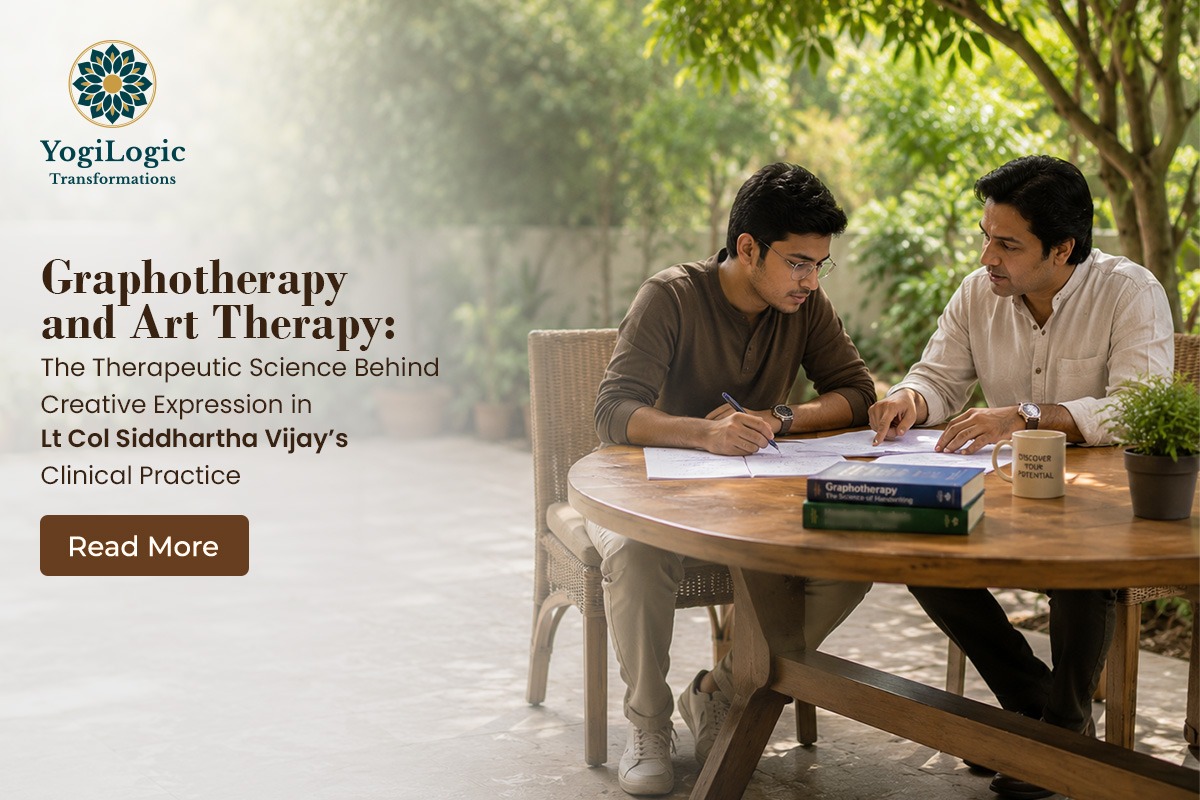
Graphotherapy should not be confused with graphology, which attempts to draw conclusions about personality from handwriting alone. Instead, Graphotherapy focuses on structured handwriting exercises that may support behavioural awareness, attention, self discipline, and intentional habit formation as part of a broader therapeutic process.
The central idea is that repeated motor patterns involved in handwriting can encourage mindful practice, behavioural consistency, and conscious self regulation.
Within YogiLogic Transformations, Graphotherapy is never used as a standalone solution or diagnostic tool. It is incorporated only when appropriate, as one component of a personalised intervention plan alongside established psychotherapies.
This balanced approach reflects the commitment to evidence informed and client centred care.
The science behind handwriting’s connection to the nervous system
Handwriting is a remarkably complex activity.
It requires coordination between the brain, nervous system, muscles, visual processing, attention, memory, and fine motor control. Every written movement involves communication between multiple neurological systems.
Practising intentional handwriting exercises encourages focused attention, sustained concentration, and deliberate motor control. These activities may support mindfulness and behavioural consistency by slowing automatic responses and increasing present moment awareness.
However, it is important to recognise that handwriting exercises alone are not proven treatments for mental health conditions. Their value lies in supporting broader therapeutic goals when used appropriately within an evidence based counselling framework.
At YogiLogic Transformations, any use of Graphotherapy is carefully matched to the client’s needs and integrated with scientifically supported psychotherapeutic approaches.
Populations who benefit most from these modalities
Creative therapeutic approaches can benefit a wide range of individuals because they offer flexible methods of self expression and emotional exploration.
Children often respond well because creative activities feel natural and less intimidating than formal conversations.
Adolescents may use creative expression to explore identity, confidence, relationships, and emotional regulation.
Adults experiencing stress, burnout, anxiety, grief, or life transitions can gain valuable insights through creative reflection combined with structured counselling.
Veterans and military families may find non verbal methods particularly helpful when processing emotionally complex experiences.
Corporate professionals facing chronic stress may benefit from creative exercises that promote mindfulness, emotional awareness, and improved self reflection.
Every therapeutic recommendation at YogiLogic Transformations is based on careful assessment rather than assumptions. Creative modalities are introduced only when they genuinely support the client’s goals.
Integration with cognitive and behavioural approaches in Lt Col Siddhartha Vijay’s practice
One of the defining strengths of YogiLogic Transformations is the integration of multiple therapeutic approaches.
Art Therapy and Graphotherapy are not isolated techniques. They work alongside Cognitive Behavioural Therapy, Acceptance and Commitment Therapy, Rational Emotive Behaviour Therapy, Positive Psychotherapy, Mindfulness Based Cognitive Therapy, Experiential Counselling, and other evidence based modalities.
For example, a client may use Art Therapy to explore difficult emotions while Cognitive Behavioural Therapy helps restructure unhelpful thinking patterns.
A professional experiencing burnout may combine mindfulness techniques with structured behavioural strategies and creative reflection.
Someone working through relationship challenges may integrate experiential exercises with Transactional Analysis and cognitive interventions.
This personalised approach ensures that therapy addresses emotional, cognitive, behavioural, and interpersonal dimensions together.
Lt Col Siddhartha Vijay applies the same disciplined assessment skills developed during more than 22.5 years of military leadership to select the most appropriate combination of therapeutic methods for every individual.
Conclusion
Healing is a deeply personal journey, and no single therapeutic method works for everyone. Creative approaches such as Art Therapy and Graphotherapy provide valuable opportunities for emotional expression, self awareness, and behavioural growth when thoughtfully integrated into evidence based psychotherapy.
At YogiLogic Transformations, Lt Col Siddhartha Vijay combines disciplined military leadership, psychological expertise, and compassionate guidance to create personalised therapeutic experiences. By integrating creative modalities with scientifically supported cognitive and behavioural approaches, he helps individuals, professionals, veterans, and families develop resilience, emotional balance, and lasting personal transformation.
This holistic approach reflects the YogiLogic philosophy where structured logic and mindful self awareness work together to help people move confidently from complexity to clarity.
Frequently Asked Questions
What is Art Therapy
Art Therapy is a structured mental health approach that uses creative expression to help individuals explore emotions, improve self awareness, reduce stress, and support psychological wellbeing under the guidance of a trained professional.
Do I need artistic skills to participate in Art Therapy
No. Art Therapy focuses on the creative process and emotional expression rather than artistic ability. Anyone can benefit regardless of their drawing or painting skills.
What is Graphotherapy
Graphotherapy involves structured handwriting exercises that may support behavioural awareness, mindfulness, attention, and intentional habit development as part of a broader therapeutic programme.
Is Graphotherapy used as a standalone treatment
No. At YogiLogic Transformations, Graphotherapy is used only as a supportive therapeutic tool alongside evidence-based psychological approaches when appropriate for the individual.
Who can benefit from Art Therapy and Graphotherapy
Children, adolescents, adults, professionals, veterans, military families, and individuals experiencing stress, anxiety, emotional challenges, or personal growth goals may benefit from these approaches as part of personalized therapy.
How are creative therapies combined with other psychological approaches
Creative therapies may be integrated with Cognitive Behavioural Therapy, Acceptance and Commitment Therapy, Mindfulness Based Cognitive Therapy, Positive Psychotherapy, Experiential Counselling, and other evidence based modalities based on individual needs.
How does Lt Col Siddhartha Vijay decide whether these therapies are appropriate
Every client undergoes a careful assessment before therapy begins. Treatment methods are selected according to emotional concerns, personal goals, behavioural patterns, and overall therapeutic needs rather than using the same approach for everyone.
Related Articles
Neuro-Linguistic Programming in Clinical Practice: Beyond the Myths, Into the Method
October 8, 2026
The Psychology of Military to Civilian Transition: Why Veterans Struggle and What Evidence Based Intervention Offers
October 1, 2026
The Infantry Officer's Guide to Managing Ambiguity: Psychological Lessons for Corporate Decision-Makers
September 28, 2026