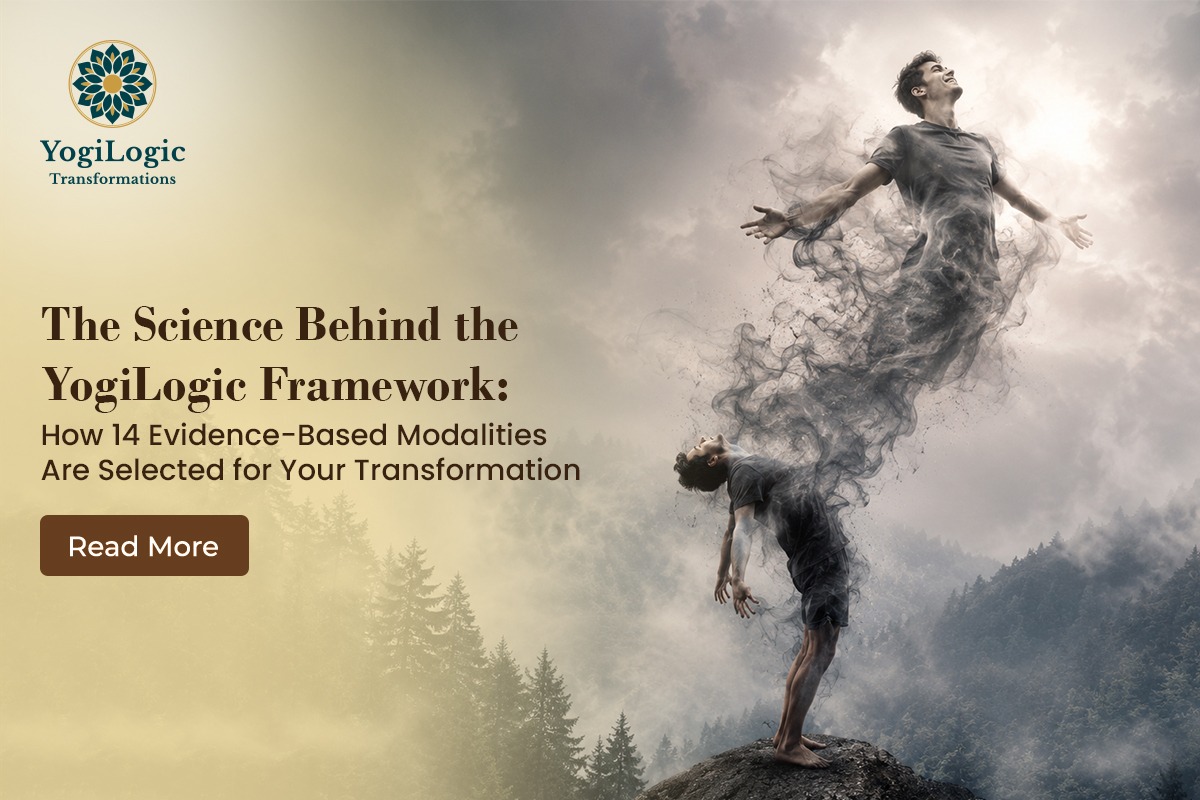
The Science Behind the YogiLogic Framework: How 14 Evidence Based Modalities Are Selected for Your Transformation
Every individual experiences challenges differently. Two people may struggle with stress, anxiety, relationship conflicts, or career uncertainty, yet the underlying causes and emotional patterns can be entirely different. This is why effective psychotherapy cannot rely on a single method for every person.
At YogiLogic Transformations, the belief is simple. Real transformation begins with understanding the individual before selecting the therapeutic approach. Rather than applying one standard technique, Lt Col Siddhartha Vijay combines structured psychological assessment with more than 14 evidence based therapeutic modalities to create a personalised path toward emotional wellbeing, resilience, and sustainable growth.
This unique framework reflects the philosophy of moving from complexity to clarity by combining scientific reasoning with compassionate human connection.
Why a single therapeutic approach is rarely sufficient
Human behaviour is influenced by thoughts, emotions, beliefs, experiences, relationships, environment, and biology. Because every person carries a unique combination of these factors, no single therapeutic model can address every challenge effectively.
Someone experiencing workplace burnout may benefit from cognitive restructuring and mindfulness practices. Another individual dealing with unresolved trauma may require experiential work combined with emotional regulation techniques. Relationship conflicts often require communication focused interventions alongside deeper exploration of behavioural patterns.
At YogiLogic Transformations, therapy is never reduced to a formula. Every intervention is selected because it matches the specific needs, strengths, and goals of the individual.
This flexible and evidence based approach creates meaningful progress while respecting each person’s unique journey.
The diagnostic phase How we assess which modalities apply
Every successful transformation begins with careful assessment.
Before introducing any therapeutic intervention, Lt Col Siddhartha Vijay spends time understanding the complete picture rather than focusing only on visible symptoms.
The assessment process explores several important areas including
- Present emotional concerns
- Personal history
- Behavioural patterns
- Thinking styles
- Relationship dynamics
- Professional challenges
- Coping strategies
- Personal strengths
- Long term goals
Years of military leadership developed the ability to observe complex situations carefully before making critical decisions. That same disciplined assessment process now strengthens therapeutic planning.
Instead of assuming what a client needs, every recommendation is based on careful listening, structured analysis, and professional psychological understanding.
This ensures that therapy remains focused, personalised, and effective.
Cognitive and Behavioural tier CBT, ACT and REBT
Many emotional challenges are closely connected to habitual thought patterns and behavioural responses.
The cognitive and behavioural tier focuses on helping individuals understand how their thinking influences emotions and actions.
Cognitive Behavioural Therapy helps clients identify unhelpful beliefs and replace them with healthier thinking patterns that improve emotional wellbeing and decision making.
Acceptance and Commitment Therapy encourages individuals to accept difficult emotions without becoming controlled by them while taking meaningful action aligned with their personal values.
Rational Emotive Behaviour Therapy helps people challenge irrational beliefs that create unnecessary emotional distress and replace them with more balanced perspectives.
These approaches are particularly valuable for stress management, anxiety, workplace challenges, confidence building, emotional regulation, and resilience development.
They provide practical tools that individuals can continue using long after counselling sessions have ended.
Performance and Neurological tier NLP and MBCT
High performance requires more than technical skills. It depends on mental clarity, emotional balance, focus, and adaptability.
Neuro Linguistic Programming helps individuals recognise communication patterns, limiting beliefs, and behavioural habits that influence performance and relationships. It supports positive behavioural change through structured psychological techniques.
Mindfulness Based Cognitive Therapy combines cognitive understanding with mindful awareness. Rather than reacting automatically to thoughts and emotions, individuals learn to observe their experiences calmly and respond with greater emotional intelligence.
These approaches are especially valuable for professionals, leaders, entrepreneurs, and individuals facing high pressure environments where sustained performance depends upon emotional resilience.
They help strengthen concentration, reduce mental overload, and improve overall psychological flexibility.
Relational and Experiential tier Transactional Analysis, Experiential Counselling and Positive Psychotherapy
Many emotional difficulties emerge within relationships.
Whether the relationship involves family, colleagues, partners, or oneself, understanding interpersonal dynamics often becomes essential for lasting change.
Transactional Analysis helps individuals recognise recurring communication patterns and relationship roles that may contribute to conflict or misunderstanding.
Experiential Counselling encourages clients to explore emotions directly rather than discussing them only at an intellectual level. This process allows deeper healing through genuine emotional awareness.
Positive Psychotherapy focuses on strengths, values, personal resources, and resilience instead of concentrating exclusively on problems. It encourages individuals to build on existing capabilities while developing healthier perspectives.
Together these therapies promote emotional literacy, stronger relationships, improved communication, and greater self awareness.
Holistic and Creative tier Art Therapy, Graphotherapy, SFBT and Hypnotherapy
Healing can occur through many pathways. Some individuals express themselves more effectively through creativity, imagination, or solution focused conversations rather than traditional verbal discussion.
Art Therapy provides a safe way for emotions to be expressed visually when words alone feel insufficient.
Graphotherapy explores handwriting based exercises that may support behavioural awareness and personal development as part of a broader therapeutic plan.
Solution Focused Brief Therapy helps clients concentrate on practical solutions, achievable goals, and existing strengths instead of becoming overwhelmed by problems.
Hypnotherapy supports carefully guided relaxation and focused attention to help individuals address certain behavioural patterns, emotional concerns, and limiting beliefs where clinically appropriate.
These approaches expand the therapeutic process by offering flexible options suited to different personalities and learning styles.
Case logic Matching modality to presentation
One of the defining strengths of the YogiLogic framework is its emphasis on clinical reasoning.
Therapy is not selected according to personal preference or routine.
Instead every intervention is matched to the individual’s presenting concerns.
For example someone experiencing anxiety driven by perfectionism may benefit from Cognitive Behavioural Therapy combined with Acceptance and Commitment Therapy.
A corporate leader experiencing burnout may require Mindfulness Based Cognitive Therapy together with Neuro Linguistic Programming and Positive Psychotherapy.
Relationship challenges may benefit from Transactional Analysis combined with Experiential Counselling and Solution Focused Brief Therapy.
Individuals recovering from trauma may receive an entirely different combination depending on their emotional readiness, resilience, and therapeutic goals.
This careful selection process ensures that every session contributes meaningfully to long term growth rather than temporary symptom relief.
Why military grade assessment sharpens modality selection
More than 22.5 years of leadership in the Indian Army shaped Lt Col Siddhartha Vijay into someone trained to evaluate complex situations with precision, patience, and responsibility.
Military decision making requires gathering information, analysing variables, understanding human behaviour, anticipating outcomes, and choosing the most appropriate strategy.
These same principles now strengthen psychological assessment.
Instead of making assumptions, every counselling journey begins with disciplined observation, careful listening, and thoughtful planning.
Combined with extensive psychological training and certifications across multiple therapeutic approaches, this background creates an uncommon ability to integrate scientific knowledge with practical human understanding.
The result is therapy that is structured yet compassionate, analytical yet deeply personal.
Conclusion
The YogiLogic framework reflects the understanding that meaningful transformation requires more than one therapeutic technique. Every individual deserves an approach that respects their unique experiences, emotional patterns, strengths, and goals.
By integrating more than 14 evidence based psychotherapeutic modalities with disciplined assessment and compassionate guidance, Lt Col Siddhartha Vijay creates personalised pathways for healing, resilience, leadership development, and personal growth.
At YogiLogic Transformations, therapy is guided by science, strengthened by experience, and inspired by the belief that lasting change happens when structured logic meets mindful self awareness.
This balanced approach empowers individuals, professionals, veterans, and families to move confidently from complexity to clarity while building emotional strength that supports every stage of life.
Frequently Asked Questions
What is the YogiLogic Framework
The YogiLogic Framework is a personalised therapeutic approach that combines more than 14 evidence based psychotherapeutic modalities with mindful self awareness. It is designed to help individuals achieve emotional resilience, personal growth, and sustainable transformation.
Why does YogiLogic Transformations use multiple therapy modalities
Every individual has unique experiences, emotional patterns, and goals. Using multiple evidence based modalities allows the therapist to select the most effective combination instead of relying on a single therapeutic approach.
How does Lt Col Siddhartha Vijay decide which therapy is right for me
The process begins with a detailed assessment of your emotional concerns, personal history, behavioural patterns, relationships, coping strategies, and goals. Based on this evaluation, the most suitable therapeutic modalities are selected for your needs.
What therapeutic approaches are used at YogiLogic Transformations
The practice integrates Cognitive Behavioural Therapy, Acceptance and Commitment Therapy, Rational Emotive Behaviour Therapy, Mindfulness Based Cognitive Therapy, Neuro Linguistic Programming, Positive Psychotherapy, Experiential Counselling, Transactional Analysis, Art Therapy, Graphotherapy, Solution Focused Brief Therapy, Hypnotherapy, Sex and Relationship Therapy, and Palliative Care.
Can different therapy methods be combined during counselling
Yes. Many clients benefit from an integrated approach where multiple evidence based modalities are combined to address emotional, behavioural, relational, and performance related challenges more effectively.
Related Articles

Neuro-Linguistic Programming in Clinical Practice: Beyond the Myths, Into the Method
October 8, 2026

The Psychology of Military to Civilian Transition: Why Veterans Struggle and What Evidence Based Intervention Offers
October 1, 2026
The Infantry Officer's Guide to Managing Ambiguity: Psychological Lessons for Corporate Decision-Makers
September 28, 2026